-
Small Business, Big Rewards
So you’re a small business trying to figure out a way to get the best return on your money from a digital marketing campaign… what’s a good place to start? One of the most common but most effective practices is an email marketing campaign.
But what is email marketing? Email marketing is a simple concept. It is sending a commercial message to a group of people via email. Sounds easy enough but understanding different types of email campaigns can help your business grow online.
The following are examples of types of popular emails marketing campaigns.
- Email newsletters- This is one of the most popular and common types of email marketing campaigns. These emails are usually send to a target group and provides helpful knowledge and tools. You want the emails to have engaging content that builds a relationship with subscribers.
- Acquistion emails- These emails will focus on creating attractive offers and informative content to an audience that have opted to receive emails from your site but have not yet converted into customers. It helps target potential customers and grow business and help build revenue.
- Retention emails- These emails help keep the lines of communication open. Sometimes subscribers stop paying attention to content so retention emails put them in a place of action by requesting feedback from them or making an offer for them to act on.
- Promotional emails- These emails are designed to encourage your target base to want to make a purchase. This is done through exclusive offers, new product information and various other services to subscribers.
If you want to acquire, engage or retain customers, email marketing is an effective and, at times, a cost efficient way to not only reach existing customers but also potential customers as well. Knowing your target base and keeping a clean email list is essential for the success of a strong email campaign.

Photo by Oleg Magni on Pexels.com -
Up for Display
If you are running a website and want to maximize its efficiency, how do you decide on the right marketing strategy for your site. If you have a business that has a specific target audience such as a particular age or gender, Google Display Network can help you refine your strategy to reach your target demographics and the right audience.
So why would you want to use display ads instead of using search ads? Search ads appear to potential customers after that customer does a Google search for whatever they are looking for. Display ads appear on sites across the Google Display Network that potential customers are visiting.
So. if you decide to use targeted Display ads, where do you start? Your goal should be to find the best way to reach customers based on interest. You want your ads to reach people that are interested in your products or services. There are three main categories you should consider.
- Affinity audiences- this gives you 80 different groups that are based on people that have hobbies or interests that are similar. It could be something like “UCA Bears Fans”. You can choose which group to show your ads to.
- Custom Affinity Audiences- this gives you the opportunity to set up custom audiences with keywords or phrases. You can even add in URL’s of specific sites that your target audience would visit. This helps you customize your audience even further.
- In-market audiences- this approach allows you see customers or looking at products or services that are related to yours. You can target your marketing to these types of sites.
There are many components that go into a digital marketing campaign. Deciding where and how to place ads can be one of the most important parts of the campaign. If you are running a long term strategy, Google Display Network may be answer you need to make your targeted campaign successful.

Photo by Engin Akyurt on Pexels.com -
A different kind of auction
Do you ever wonder how those ads pop up after doing a google search? Is it just some random process or is there a formula for how those ads appear? Google has a very specific way of choosing how those ads are placed. They do a lightning fast auction every time someone searches on Google or goes to a site that shows ads. Unlike other auctions, the highest bidder does not always win. Lets take a look at how those ads are placed.
During the ad auction, there are three main components that determine the ads that appear and in what order.
- A bid- If you are participating in the auction, you set a bid that tells Google Ads the most you are willing to pay for someone to click on your ad. It does not always mean you will have to pay the maximum amount. Many times people pay less and a bid can be changed any time.
- Quality of ads- One of the main focuses of Google Ads is making sure that when someone does a search they are given results that are useful and relevant to what they are looking for. Google Ads formulate a quality score of the ad and that is a huge part of determining where the ad is placed.
- Ad extensions and ad formats- When creating an ad, you can add other information such as links to specific things on your or a phone number. This additional information is called an ad extension. Google Ads looks at the extensions and tries to figure out the expected impact they will on your ads performance.
If you have a high quality ad that has relevant key words and extensions, you have a good chance of having your ad be put in a better position than someone that pays more but their ad isn’t as good. Google Ads takes the three factors listed above to make sure that when customers do a search they are given the most relevant and useful ads.

Photo by Pixabay on Pexels.com -
That click is going to cost you
For many people that operate websites, you have to rely on a strong SEO to make sure that your targeted audience is reaching your site. SEO is free and if done well can usually get the traffic you need to your site. But there are other ways to get your audience to click on your site over your competitors.
PPC-or pay to click- is a way to reach the people you want to come to your site. But what is PPC and how does it work? If you are a website owner and you decide to go with a pay per click campaign it works exactly the way it sounds. You pay a fee every time someone clicks on their ad.
A pay per click campaign has certain objectives. You want the campaign to be generate leads to your site, Once they are there you want to see an increase in sales and you also want to see a increase in brand awareness. You have to pay a fee for each click but is it worth it?

Photo by Negative Space on Pexels.com If done correctly, PPC can have real benefits for you company. The key is making sure that the campaign brings the right people to your site. If it brings your target audience to your site, the costs for PPC really won’t matter if the benefits role in. Lets say that cost per click is $5 but on average the person that comes to your website spends $150- then clearly that was a good use of money in order to get that person to your site.
PPC offers a lot of advantages. It can help you track your marketing goals, increase the exposure of your company, reach your target audience and become more competitive in the marketplace. The ultimate goal of PPC is to get your audience to your site to make a purchase. It has proven to be an important part of digital marketing campaigns and should be something any website owner should consider.
-
Getting your website to the top
SEO, or search engine optimization, should be an important part of any digital marketing campaign. Here are some basics about SEO and some of the factors about it that can make or break a website.
Being the top result of many different search queries should be the main goal of SEO. You want your site to the top organic search result- meaning that they are results that are not paid for. The most important way to rank well on search engine results is quite simply to provide a good website.
You want to maximize your relevance so that a search engine can accurately look at the topics on your website. There are several things that can be done to help with that but one of the most important factors is where your target keyword phrases are located on your website. In order to maximize relevance, the following “rules” should be followed.
- Make sure that your target keyword phrase is in the URL. When relevance is being calculated, words in the URL are heavily weighted.
- The title tag is another important page location. The target keyword phrase should also appear in the title tag, again because the words in a title tag are heavily weighted.
- A third important page location is the header tag. In the relevance calculation, words inside of the header tag receive more weight.
- In the main content of a page, the target keyword phrases should be used at least once.
So how do you choose the right target search phrases? Its very important to know your target audience. From there, you want to find exact words or phrases that would be used by that audience when they are searching for what you offer. Using these words and phrases and placing them in the right places on your website, will help your website be at the top of a search result and guide your target audience to your site.
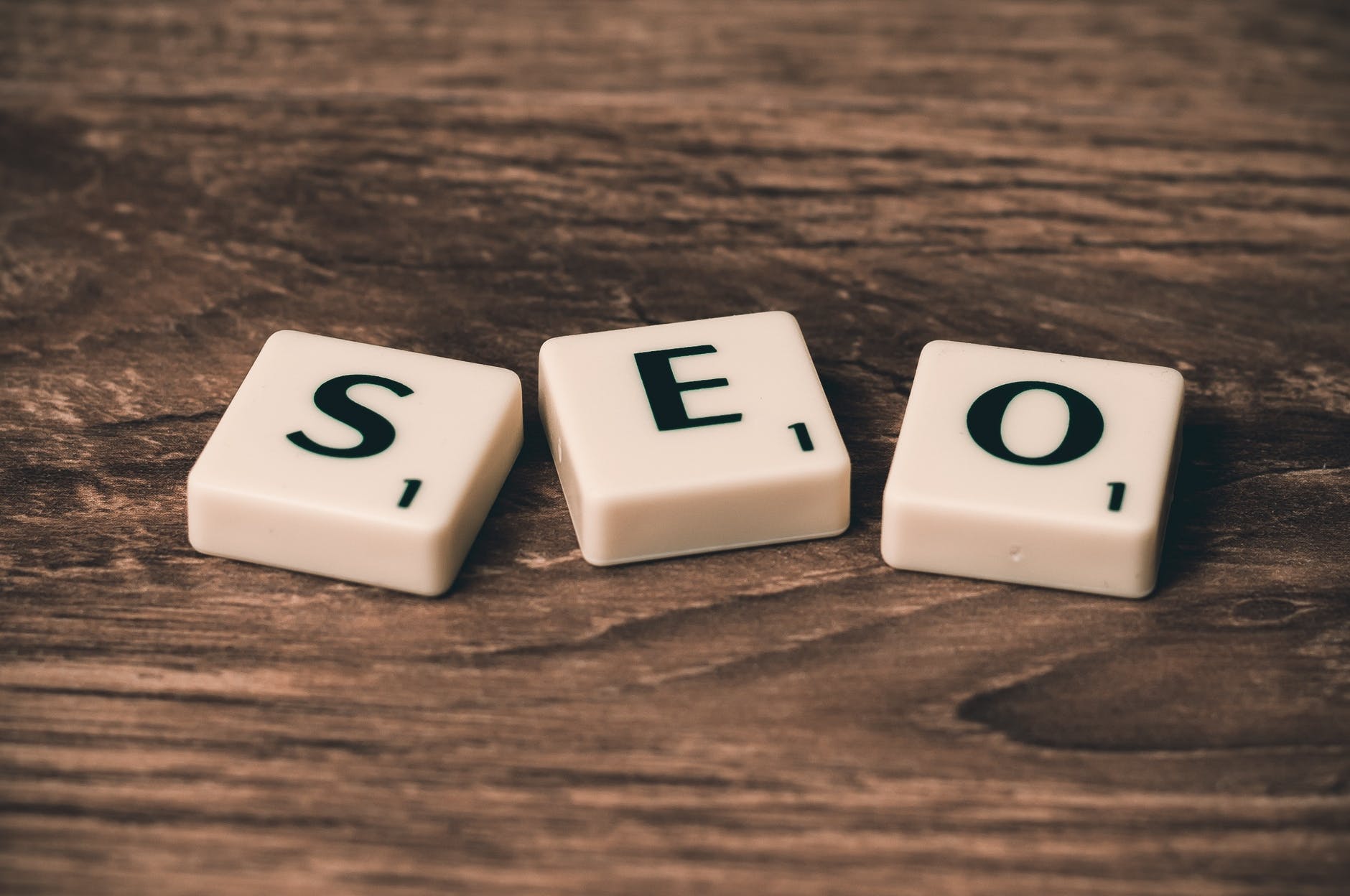
Photo by Pixabay on Pexels.com -
That’s Not What I Googled!
Have you ever done a search for a product, person, company or organization and gotten results that have nothing to do with what you were looking for? If so chances are that the SEO isn’t being utilized. So what is SEO and how does it help websites become more visible to the correct audience.
SEO stands for Search Engine Optimization and is a process that has many elements that are important to maximize your presence on the internet. Here”s a breakdown of some aspects of SEO.
Keywords- these are words or phrases that people use to find what they need online. It is important that keywords have been chosen carefully and that research has been done to ensure the right words have been chosen . You want to find words that have high search rates and not much competition.
Content- Its important that the content of your website is relevant and holds the attention of a visitor to your site. Using tools like videos, podcasts and blogs make it easy to create content that will get the right visitor to your sight and keep them there. A good example would be if you owned a store that sold cookware and other kitchen items. You could have videos showing cooking demonstrations that use the items available in your store, a blog that shows the latest in kitchen gadgets or a podcast that gives instructions for recipes and other things.
Search Engine Marketing- This is paid marketing. It can include things like social media ads, pay per click, Google AdWords, etc. Using these types of tools can help reach new and targeted audiences. Search Engine Marketing is not a major part of all digital marketing campaigns but if you use it the right way with your SEO plan it can reap a lot of benefits.
SEO is another important part of the puzzle in a digital marketing campaign. Ensuring that the right people are getting to your site is important for the success of any website.

Photo by Vojtech Okenka on Pexels.com -
How Customers Choose to Buy Products
Figuring out how to get customers to not only visit your site but to ultimately buy your product, donate to your cause or sign up to take some kind of action is a bit of a science. The attribution method is a way of figuring out how a consumer ended up at your website and also what caused them to purchase a product or service.
Just like many other components of a digital marketing campaign, marketing attribution needs to be something that fits the need of your company and website. What works for you may not work for someone else so its important to find the right fit.
Last click, linear and time decay are different kinds of marketing attribution models. Last click is where the credit is given for a sale to the last click a consumer makes. This is considered to be a pretty outdated model. The linear model divides the credit for a sale equally among all of the channels that are used to get the consumer to make a purchase. Time decay is when the credit for a sale is given to the touchpoints that were used closest in time to when the sale was made.

Photo by cottonbro on Pexels.com So how does a business or company decide which model to use? When making a decision, a business needs to take several things into consideration. Examples of things they need to look at would be how many touchpoints their site has or what is the length of their sales cycle. Looking at the specific goals for you site, should help you line up the best attribution model to help you maximize sales and look back at the performance of your site. Using the right model is an important part of making a digital marketing campaign a success and can help know if there are things that need to be changed for future campaigns.
-
NSAMCWADLP, what the heck is that?
NSAMCWADLP may not just be the longest acronym in history, it is also one of the most fundmental parts of starting a digital marketing campaign. That acronym stands for “Never start a marketing campaign without a dedicated landing ‘age” and is the building block for anyone looking to launch a website.
Landing pages are important because it is the place where as a website owner you want the user to take action. That can be purchasing a product, signing up for a newsletter, donating to an organization and several other things.
A landing page is not the same thing as a homepage. A homepage is the initial page where a user finds themselves when first coming to the site. As i said earlier, the landing page is where you want people to take action. But why is it a good idea to have a landing page that is separate from the home page? The home page usually has a lot of information on it. It carries the information and links for the rest of the site. Its main focus is about messaging and introducing or reinforcing brand awareness. It’s goal is to get the user to go to other parts of the site.
Anyone starting a digital marketing campaign should have a dedicated landing page because the goal of any landing page should be for the user to take action. Unlike the home page which has a lot of different information, the landing page is more simplified and has only one focus. If these two pages are not separated, then the information can start to blend together and the likelihood of action being taken by a user goes down.
Keeping a dedicated landing page is a fundamental of digital marketing for a reason. It helps the user have a clear idea of what action they should take on the site and helps with the goal of any site- to meet and exceed conversion goals.

Photo by Djordje Petrovic on Pexels.com -
The ABCs of A/B Testing
The use of A/B testing in digital marketing is very important. If you have a web page and you are not using A/B testing, then you are not using one of the most important tools out there to help your website become successful.
A/B testing can tell you exactly what parts of your page appeal to the people that visit it. When using this type of testing, you are not making two completely different webpages. With A/B, certain elements of the same page are changed to see which one works the best or are the most attractive to visitors. This can help someone fine tune their marketing and promotional strategies.
Different businesses have different types of visitors to their sites. What is successful for one company’s website might now work at all for another company. Using the A/B testing approach allows your website to fine tune its appearance and appeal to your audience. This can help increase website traffic, give you a higher conversion rate and a lower bounce rate and hopefully have visitors make purchases and return to the site.
A/B testing shows that making the slightest change on a page can have a big impact. One of the elements most often tested is changing the call to action button on a landing page. Studies have shown that simply changing the color of the button or revising the text on the button can have a big impact on the action a visitor to the site makes. Design elements, such as changing font or the color scheme of a landing page, can also bring about increased positive activity on your page.
One of the keys of a successful website is constantly looking at ways to improve it. A/B testing has proven to be successful in helping site owners maximize their content and appeal to their target audience.

Photo by Burst on Pexels.com -
Don’t Eat Those Cookies
Cookies are files in websites that remember different things that you have looked at or clicked on. We’ve all seen how their used. Whether its items that are saved in a shopping cart after you leave the site or login information for things like Blackboard, cookies can help make our lives easier and save us time.
But are cookies a completely thing? A lot of people say no. Many times publishers can sell your information to third parties. This can cause you to receive a lot of targeted online advertising and gives websites and companies that you have no visited access to personal information about yourself.
Even worse than just the annoying advertisements that pop up, cookies can be used to track your online activity without your permission. This is an invasion of your privacy. An example of how this can happen is if you are on a certain website. If there are online ads on that page, they can all have cookies in them that can track you even if you did not click on the ad. Also, even though cookies themselves are totally bad, there is a possibility that third parties or even hackers can get information from cookies that allows them to see your personal information and browsing history.
There are ways to let cookies help you while at the same time keeping your computer and privacy safe. You can limit tracking cookies by using things like search engines that are more private, you can manually go in an delete certain cookies or you can use a VPN (Virtual Private Network) that will mask your IP address and keep your information from being tracked and followed.
Cookies are like most things in this world. There are good parts and bad parts that you have to take together. For the most part, cookies help more than they hurt but you should always look your for your safety and privacy online.

Photo by Luis Quintero on Pexels.com
-
Subscribe
Subscribed
Already have a WordPress.com account? Log in now.
 Paul Suskie UCA